Ensure a smooth and legally binding transfer of vehicle ownership in Connecticut by following these steps. If you are selling to a dealer, please consult with the dealer before signing your title.
1. Verify Your Title
First, verify the title is registered in your name and contains no errors or alterations. A lost, stolen, or damaged title must be replaced with a duplicate through the Connecticut DMV before you can sell.
2. Notarization Is Not Required
Connecticut does not require the seller's signature to be notarized for a typical private sale. The signatures of both the seller and buyer on the title are enough. Notarization usually only comes into play in unique situations like a Power of Attorney signing. If you're not sure whether yours qualifies, reach out to the Connecticut DMV.
3. Complete the Seller Information on the Back of the Title
The seller's information section is on the back of the title and must be completed precisely:
- Seller's Signature: Sign in the box labeled for the seller's signature. All owners listed on the title must sign.
- Printed Name of Seller: Print your name exactly as it appears on the title.
- Buyer Information: Provide the buyer's full name and address in the designated section.
- Odometer Reading: Provide the vehicle's accurate mileage at the time of sale, ensuring this information is filled in correctly without errors. It is important to not guess this number, and record an exact mileage number.
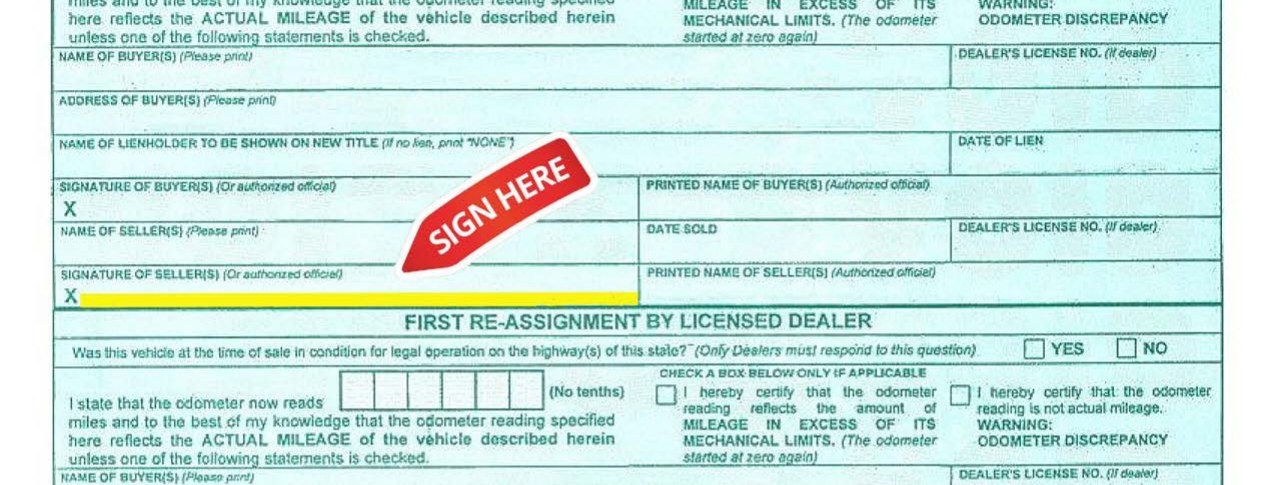
Important: Never apply white-out, scribble through information, or attempt corrections on a title — any of these will invalidate it.
4. Address Liens
Got a lien on the title? You'll need the lienholder's permission before transferring ownership. They can either sign the title directly or issue a lien release letter. The transfer isn't legal until the lien is officially cleared.
5. Consider Multiple Owners
Multiple owners on a title? The connector between names tells you whether one or both signatures are required:
- "AND": Both owners are required to sign.
- "OR": Only one owner needs to sign.
Important: Connecticut does not require a title for vehicles 20 model years old or older. For older vehicles, the seller may transfer ownership using the prior registration and a bill of sale.
Key Takeaways
- Notarization is not required for a standard private sale.
- Ensure all signatures match exactly as they appear on the title.
- Address any existing liens before proceeding.
Follow these steps and your Connecticut title transfer should go through without issue. For full official guidance, visit the Connecticut DMV website.
Verified May 2026